Make the whole outdoor room feel connected
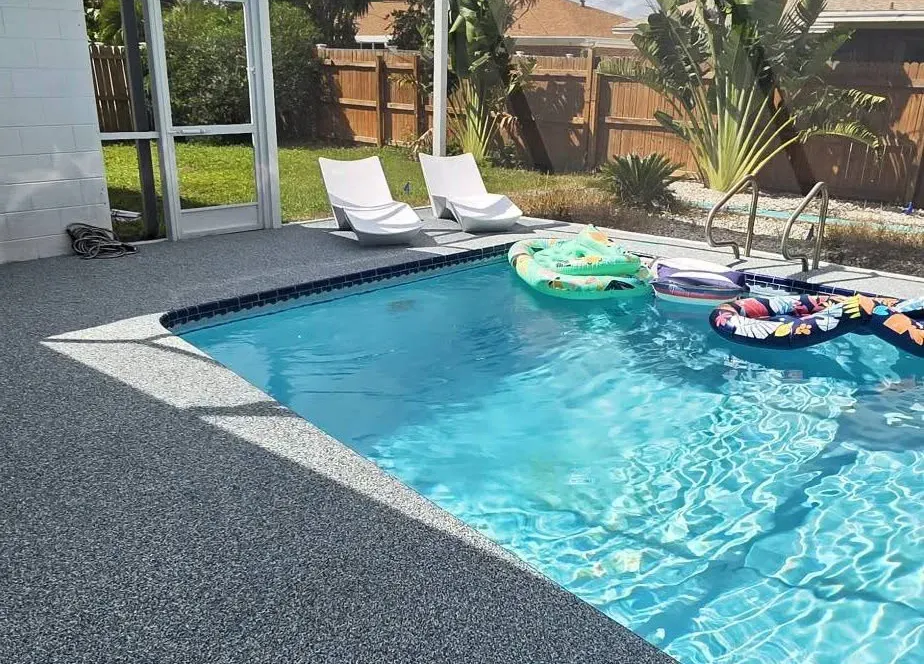
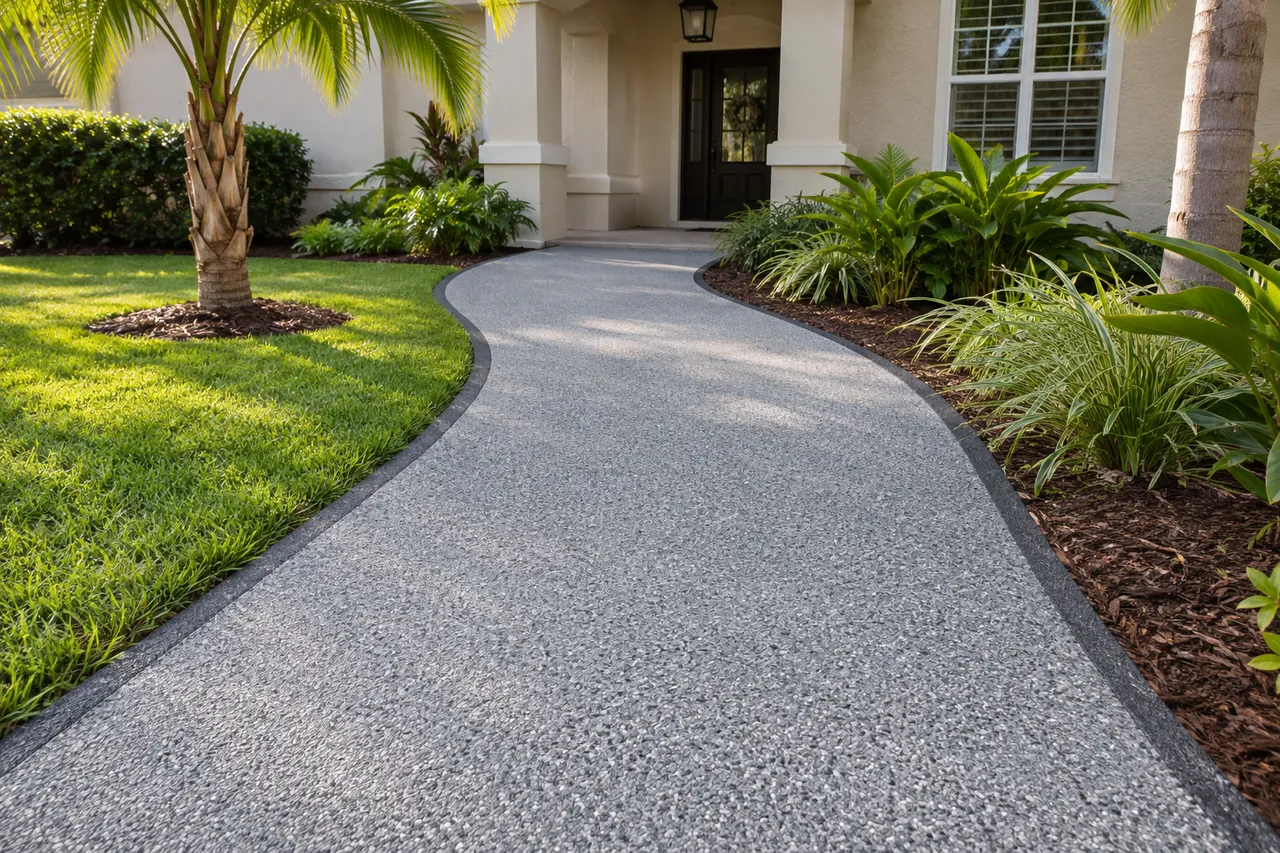
A patio often links the kitchen, pool deck and backyard. Resurfacing works best when those connections are considered together instead of treating each rectangle as a separate project. Think about where furniture sits, how guests move from the house and whether the porch is used barefoot. A coordinated blend and a restrained border can bring together older concrete sections without making the space visually busy. Bring photos of your furniture and trim to the consultation so the material choice supports the room you already enjoy.
What needs checking in a screened lanai?
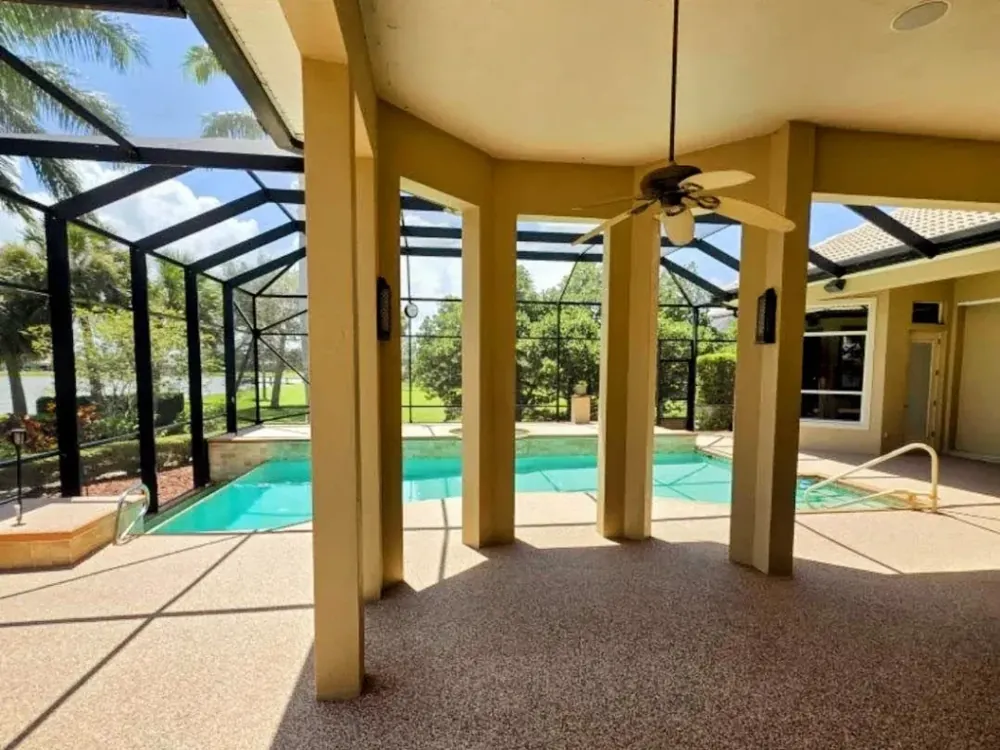
Door clearances, screen tracks, support posts and floor drains deserve attention before work begins. A new layer changes the relationship between the floor and a low door sweep, so transitions should be measured rather than guessed. Furniture and planters also need a temporary home during preparation and curing. Tell us where roof runoff enters or where water collects after a storm. The plan should preserve access to drains and enclosure hardware and explain how the new finish meets adjacent tile or an uncovered walkway.
Choose a finish for the way you use the space
A quiet reading porch and a busy dining patio do not experience the same traffic. Describe rolling furniture, pets, exercise equipment and outdoor cooking before choosing a system. Heat sources, sharp furniture feet and cleaning chemicals need particular care. Ask for guidance on protective furniture pads and manufacturer-approved cleaning products. A lighter color may suit the house visually, but the best choice also considers leaves, shade and how regularly the area is cleaned. Physical samples help you judge these tradeoffs in your own light.
Can a covered patio and pool deck be done together?
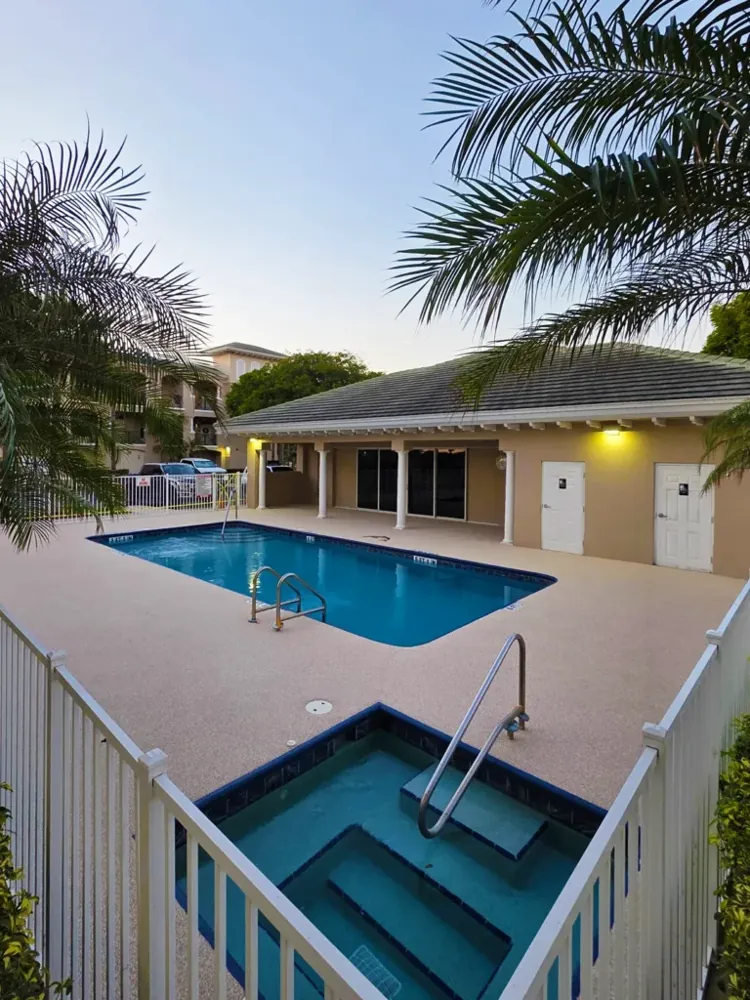
A combined plan can make the transition more intentional, but each area still needs its own assessment. A sheltered slab may carry old paint while an exposed section has a different coating or drainage pattern. List each surface and show us the joins between them. Your quote should identify the preparation, finish and edge treatment for every area, even when the same blend is used throughout. If you want to phase the work, ask about practical boundaries and future color matching before the first section is installed.
What should your written quote include?
A useful quote identifies the areas to be treated, the chosen system and the preparation required for the existing base. Ask how drains, edges, joins and changes in level will be handled. Confirm whether repairs, removal of unsuitable coatings and furniture moving are included or separate. The price should be read alongside those details rather than compared as a single number. Before approving work, make sure you understand the scope, exclusions, schedule and conditions for returning the space to use.
Choose colors from real samples
An on-screen blend is a starting point, not a final material approval. Ask to see current physical samples next to the surrounding finishes and in the lighting where the surface will be used. Consider the house color, trim, adjacent flooring and expected cleaning routine. Borders and custom details should be agreed in the layout before installation. Availability can change, so confirm the actual product and blend in the written proposal rather than relying on the illustrative colors shown on this website.
What happens after installation?
Follow the care instructions for the exact system installed at your property. Ask which cleaners, equipment and furniture protectors are recommended, and how to inspect the surface around edges and drains. Return-to-use instructions should explain when the area can reopen and when furniture or fitness equipment can be placed on the new finish. Keep the product details and written warranty with your property records. If damage or a change in the base appears, contact the team before attempting a repair or applying another coating. The right maintenance plan depends on use and exposure.
How much will this project cost?
There is no single published rate that fits every property. Area, base condition, preparation, access, edge details and the selected system all affect the scope. Approximate dimensions and photographs help with the first conversation, while a site assessment establishes what needs to happen before installation. Request a written quote and ask about the proposed product, expected maintenance and applicable warranty terms. Our cost guide explains how to compare proposals and which project details to gather before you call.
Explore the rubber surfacing cost guide or compare rubber, pavers and cool-deck-style coatings before making a decision.